A City on Edge: What the ICE Shooting in Minneapolis Reveals About Power, Trust, and Accountability
As federal and local authorities clash over a fatal encounter, Minneapolis becomes the center of a national reckoning over enforcement, transparency, and who answers to whom.

President Roberson
January 10, 2026
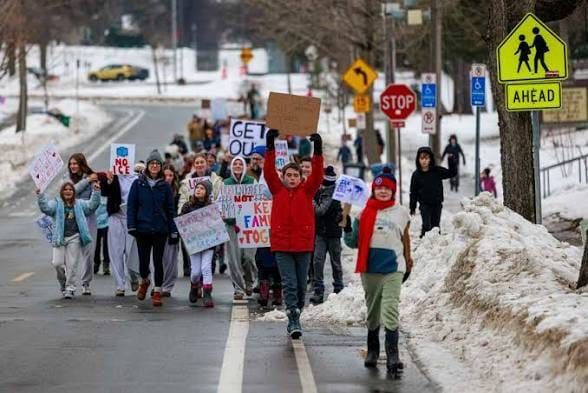
MINNEAPOLIS — In the early moments after a fatal shooting involving a federal immigration agent, confusion spread faster than facts. Sirens cut through a residential neighborhood. Phones came out. Videos began circulating. And almost immediately, two versions of the same event took shape — one from the federal government, another from local officials and community members.
What followed was not just grief or anger, but something deeper: a familiar, unsettling question that continues to haunt American public life.
Who is accountable when power is federal, force is lethal, and trust is already fragile?
The shooting, which occurred during an Immigration and Customs Enforcement operation in south Minneapolis, has become a flashpoint — not only because of the loss of life, but because of what it exposes about the relationship between federal authority, local governance, and the communities caught between them.
This is a developing story.
The Incident That Sparked a Citywide Reckoning
According to federal officials, ICE agents were conducting an enforcement operation when an encounter escalated. An agent fired multiple shots, killing a woman at the scene. The agent has been placed on administrative leave while reviews proceed.
Federal authorities say the agent believed there was an immediate threat. They argue the use of force was justified under training and protocol, emphasizing the dangers officers face during enforcement operations.
But that explanation has been met with skepticism — not just from activists, but from city and state leaders themselves.
Local officials say the publicly released information does not adequately explain why lethal force was necessary. Video footage circulating online appears to show the woman attempting to leave in her vehicle, not charging officers. While the footage does not capture every moment, it has fueled doubts and intensified demands for a fuller accounting.
What makes this case especially volatile is not only the disputed facts — it’s the absence of shared authority over the truth-finding process.
A Clash of Jurisdictions — and Narratives
Almost immediately, tension arose over who would investigate the shooting.
Federal agencies moved quickly to assert control over evidence and the review process. State and local authorities were sidelined, sparking sharp criticism from Minneapolis leaders and Minnesota officials who argue that excluding local investigators undermines public confidence.
Their argument is simple:
Accountability must not only exist — it must be seen.
Federal officials counter that ICE agents are governed by federal law and that internal review processes are both thorough and appropriate. They warn that politicizing enforcement decisions could put agents at risk.
This standoff — federal authority versus local oversight — lies at the heart of the controversy.
Minneapolis is a city that has learned, painfully, what happens when accountability feels distant or opaque. That history magnifies every unanswered question, every delay, every institutional silence.
Public Response: Protest, Pain, and a Demand for Answers
Within hours, demonstrations formed. Over the following days, they grew.
Protesters gathered not just to mourn, but to demand transparency and change. For many, the shooting felt less like an isolated incident and more like the latest chapter in a long struggle over policing, immigration enforcement, and the role of federal power in local communities.
City officials emphasized the right to protest and called for calm, even as emotions ran high. Organizers framed their demands around three themes: accountability, oversight, and limits on federal enforcement in residential neighborhoods.
Supporters of ICE, however, argue that agents are being unfairly vilified for doing dangerous work. They say hesitation in the field can be deadly and that agents must be empowered to protect themselves.
The divide is stark — and emotionally charged.
Why This Case Is About More Than One Shooting
This incident resonates because it sits at the intersection of several unresolved national conflicts:
Immigration enforcement vs. community trust
Federal authority vs. local control
Officer safety vs. civilian accountability
Speed of force vs. clarity of justification
For years, immigration enforcement has increasingly taken place far from borders — in cities, neighborhoods, and homes. That shift has blurred the line between immigration policy and everyday public safety, raising difficult questions about training, oversight, and proportional response.
When those operations turn deadly, the consequences ripple far beyond one city.
The Transparency Problem
Perhaps the most destabilizing element of this case is not what is known — but what isn’t.
When investigations are opaque, trust erodes. When local leaders are excluded, suspicion grows. When timelines stretch and answers stall, anger hardens.
Transparency does not mean presuming guilt.
It means respecting the public’s right to understand how life-and-death decisions are made in their communities.
In this case, the lack of shared investigative authority has made transparency harder, not easier. And in a moment already charged with emotion, that gap has become a catalyst for unrest.
Political Implications Beyond Minneapolis
The shooting has already begun shaping political conversations far beyond Minnesota.
Some lawmakers are calling for stricter limits on federal immigration operations in cities. Others are pushing back, warning that weakening ICE would undermine enforcement nationwide.
This debate is unlikely to fade quietly. It touches on core questions of sovereignty, federalism, and civil liberties — issues that will almost certainly surface in upcoming elections and legislative fights.
For independent voters and moderates, the case presents a familiar frustration: competing truths, entrenched positions, and few voices focused on practical solutions.
What Comes Next
Multiple reviews are underway, including federal internal investigations and parallel legal assessments at the state level. It remains unclear whether criminal charges will be filed or whether policy changes will follow.
What is clear is that this case will not simply disappear.
Key questions remain unanswered:
What exactly justified the use of lethal force?
Why were local authorities excluded from early investigation stages?
Should immigration enforcement be conducted differently in residential areas?
How can accountability exist without undermining officer safety?
Until those questions are addressed, Minneapolis — and the nation — will remain on edge.
Why We’re Covering This at America’s Newsletter
This story matters because it is not clean. It is not simple. And it cannot be reduced to slogans.
At America’s Newsletter, the goal isn’t to inflame — it’s to clarify. To slow down the noise and examine what power looks like when it meets real people, real streets, and irreversible consequences.
This is not about choosing sides.
It’s about demanding standards.
Standards for transparency.
Standards for accountability.
Standards for how authority is exercised in a democratic society.
A Note to Readers
This story is still unfolding. Facts will emerge. Narratives may shift. Accountability may or may not follow.
If you want continued, clear-eyed coverage of stories like this — without spin, without party loyalty, without outrage bait — then I invite you to subscribe to America’s Newsletter.
Not because I have all the answers.
But because these questions are too important to leave to noise alone.
Subscribe. Stay informed. Stay serious.
Reply